
[caption id="attachment_9541" align="aligncenter" width="620"]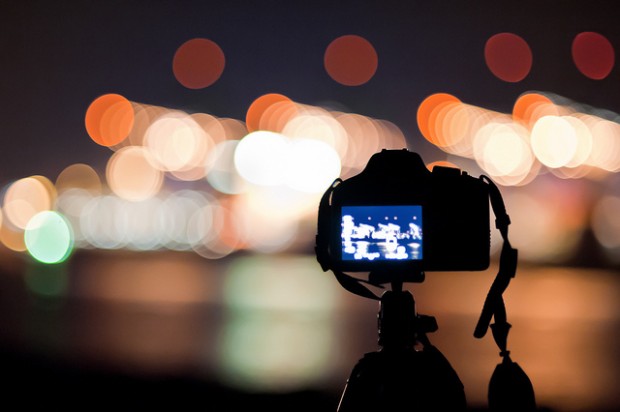 Photo via Flickr.[/caption]
“You have a really good eye!”
It’s the compliment tossed at every photographer, suggesting they are innately able to see things others don’t. Tyler Wirken rejects this praise; he’s worked hard to see what he sees (and photographs). “I have trained my brain to interpret things in a different way,” Tyler says, before quoting Henri Cartier-Bresson: “All photography is is the satisfaction of the eye.” What exactly does the eye hunger for from a photograph? How can images satisfy the viewer? Here are the three principles that define great photography, according to Tyler, and how to use these elements to make the viewer of your work happy. Brightness. Eyes are immediately attracted to the brightest part of the photograph. That’s why you see so many print ads that are just a page of white space, Tyler says. In these instances, the creative director is brilliantly using brightness to transfix your eyes and direct your vision to the campaign message — which is often smack dab in the middle of the white page. Use highlights to illuminate and attract, but make sure you don’t blow out Focus. The eye is naturally drawn to the sharp things in your frame, explains Tyler. Clarity of vision is pleasing to the eye, as well as to the brain. There’s a reason we have eyeglasses to see better; blurred or unfocused vision is a dangerous and painful irritant — and, as such, the eye quickly finds the clearest, sharpest elements. Clutter. The eye doesn’t want to have to sift through a mess of objects in order to find the true subject of your image. When there is too much noise in a photograph, the eyes have nothing to settle down and focus on, explains Tyler, who uses this aversion to clutter to his advantage. “I can direct my viewers’ eyes to what I want them to see,” Tyler says. But this doesn’t mean you should seek out only shots with simple composition. “The greatest joy for me is geometry; that means a structure,” Henri Cartier-Bresson is famous for saying. “You can’t go shooting for structure, for shapes, for patterns and all this, but it is a sensuous pleasure, an intellectual pleasure, at the same time to have everything in the right place. It’s a recognition of an order which is in front of you.” Train your eye to know when all of these elements have suddenly clicked into place. To quote the master: “Your eye must see a composition or an expression that life itself offers you, and you must know with intuition when to click the camera.”