
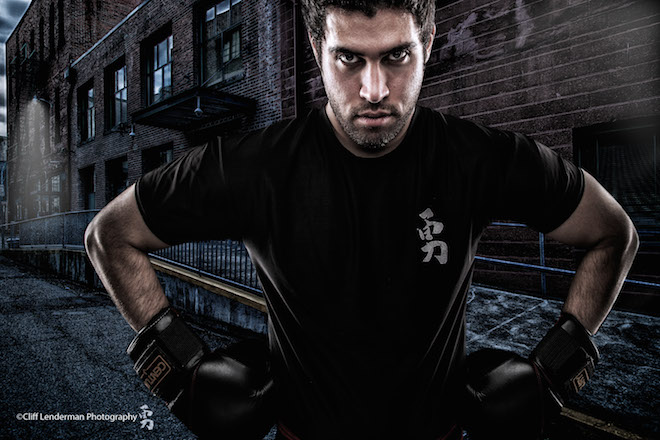
Necessity is the mother of invention – or, in CreativeLive student Cliff Lenderman’s case, motivation.
When Cliff's regular photographer, a black belt student from the mixed martial arts gym he owns, let Cliff know he couldn’t take the photos he needed for his website, he knew it was time to finally just learn the craft himself.
“I figured I could buy a camera and learn how to do it myself.”
That was just 10 months ago. When Cliff shared his photographs during the pre-show for Joel Grimes’s Commercial Photography class, viewers were blown away. In less than a year, thanks to a combination of need and passion, Cliff had become an astoundingly good photographer.
Cliff had always liked photography, but he hadn't bothered to learn much of the technical elements.
“I shot with a point and shoot but I didn’t understand anything,” he explains. His wife encouraged him to pick it up as a hobby, ribbing him about the 7,000 photos he shot on their trip to Europe, “I took a Rebel and I shot on auto I thought I’d take lots of pictures to make sure we had a good one,” Cliff explained.
But between his overwhelming stack of photos from Europe and his business needs, he realized he was going to need a lot more information, so started poking around the internet for photography classes.
“I ended up on CreativeLive. I saw John Greengo was teaching a course, I ended buying it.”
That sealed the deal. “When I went to Hawaii, I practiced all of the techniques I learned. Then I got hooked.”
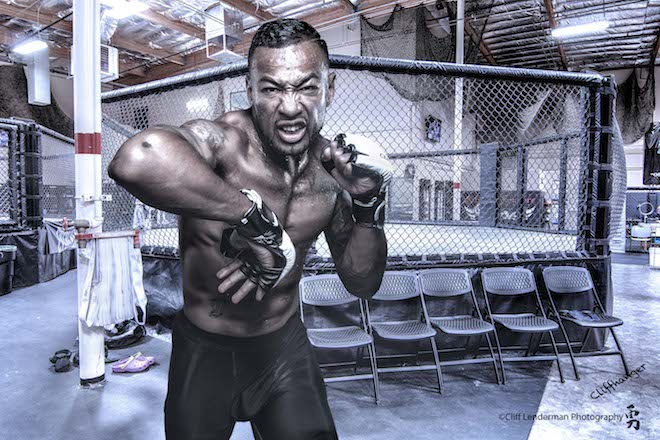
He also decided which gear to buy based on what he saw the professionals using, “I bought a 5D MarkIII because when I was watching Lou that is what she was using, When I started out I just mimicked, I bought the same lights, I bought the same tripod. It makes it easier.”
The photography bug had bit and Cliff got eager to create the types of images he saw others creating, “I love doing compositing, I can’t draw, but with Photoshop there are tools I can use and create something artistic."
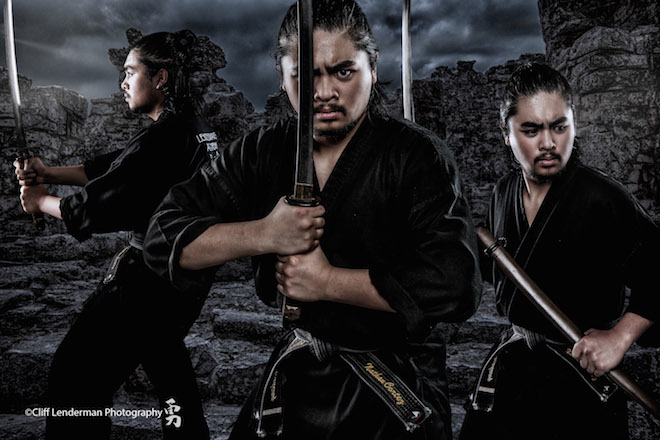
Time behind the lens has helped Cliff connect with that artistic side of himself, “My perception of the world has changed. After being exposed to Joel Grimes, I look for backgrounds, I’m looking at clouds. It really opens people’s eyes. You really start to look at life differently.”
And it’s working. He has some commercial interest in his work, and has shot some of the UFC's top fighters. He's also focusing on mastering his craft and making it easier to travel.
“I am practicing with speedlights, so I can take lighter equipment when I shoot.”
Cliff’s goal is to master compositing so he can go into gyms and shoot portraits of students and fighters set against a composite backdrop which gyms can use to promote their training. And he knows his market.
"It’s my industry, what I like is what they like," he says, so he’s developing a plan. “An MMA guy wants to be on a grungy background, I’ll shoot some portraits and have a package deal.”
So what advice does Cliff have for others?
“I think a photographer who is going to be successful will have to jump in and really spend time on their education. I think its tempting to buy equipment, start shooting and develop a lot of bad habits, I bought my equipment and spent the time learning. People don’t spend as much money on their education as they do on their equipment and thats a real big part of it, if you are going to be successful, you’ve got to invest in your education.”