Transcript of the video above, "DIY Mastering and Dynamics Control with Jesse Cannon". Edited from a speech-recognition draft for readability and identifiable names. Music demonstrations are marked; unclear wording is indicated in brackets. Consult the video for the original delivery and on-screen settings.
So, the next part to keep going with the fun is dynamics. Dynamics are, as we discussed much of yesterday, the other big part of mastering. These are mostly going to be done with a compressor and a limiter. The core of mastering, and what a lot of you'll see is, and you know, you obviously have read on the internet, is bus compressor. So, your bus compressor is, as we discussed yesterday, a lot of the glue in the mix. It could be the way you shape the punchiness and the transient attack. It could be how you glue it all together. Then the multiband compressor, what I like to think of as, at least my approach to it is, is the way to smooth out and keep tracks big when they want to be big and small when they want to be small and just give an overall gloss to the picture.
It helps to bring out details. It helps to make things just translate better, in my opinion. Because you're dividing, a multiband compressor divides up the compression duties into, most commonly, five different places. You're able to do different controls, and get different side of characters. The next we have is the brick wall limiter, our friend that we discussed at great detail yesterday, which is what's thought of as making the record louder. Lastly, we have tape saturation, which we'll also call, you know, clipping distortion. Most commonly this is going to be saturation, but we use that to control our transients, bring out glue to the mix and bring out character to the mix that we want.
So the first thing we're going to discuss is the bus compressor. As I said, this is a compressor that goes over the overall mix. Now, when we say bus compressor, that's short for two mix bus compressor. There's also bus compressors like you'll do a compression of your drums, your vocals on a bus. It's a shortened nomenclature that can be sometimes misconstrued. We're talking about a mix that goes over, a compressor that goes over the whole entire mix. You hear this on most mixes. Now, do most mixers put this compressor on before they send it off to a master engineer in the professional world? Yes. Do some not that do great mixes?
Absolutely. Ross Robinson, who I used to work for, who's everybody from At the Drive-In, Korn, Slipknot, Glassjaw, he really was not into bus compression a lot of the time and would not use it. He's made lots of classic records that have sold tens of millions of copies. A bus compressor can make the mix punchier, more smooth, more cohesive. It's kind of your creative domain. When you learn to use this, you can bring out so many different parts of the sound. It's definitely one of those tools you want to spend a lot of time learning. So, what I use. FLUX Solera is my most common tool, as is the [unclear FLUX processor name], which could be argued isn't really a compressor, but it controls dynamics.
That's a subtlety argument I'll leave. Affordable. The Slate VBC is so awesome and it's getting rave reviews from everybody and it's amazing that they did such a high quality product for so little money. I believe it's $150 when it's on sale every other month. Such a great tool. I call the Massey CT4 free. It's free in that Massey are a very kind company who makes great tools that allow you to download all their plug-ins as demos. The thing about them is you can fully use them, but their settings won't save unless you pay the whole $75 they usually ask for a plug-in. It's very kind of them.
If you don't know if you want to buy this or not, you can always screenshot the setting and set it back up and do some testing and playing around as you learn. They're such a great company. I suggest supporting them, though, for making such awesome tools. There's tons of other stuff out there. In fact, in this next demo, I'm going to not use any of these. I'm going to use what's really the most common bus compressor, which is the SSL compressor. So why is the SSL compressor the most common compressor? Because most big records are mixed on an SSL. So what's also common with an SSL is that there's imitations of it, such as the Alan Smart and the TK Audio, which imitate this style of compression that the SSL compressor does because it's such a ubiquitous sound in music today.
And then they do it with some bells and whistles. The Alan Smart compressor has simple controls, or I should say, the SSL compressor has some simple controls. And it really can help you learn to understand compression. And just as like, you know, another one of those theories that we've been talking about a lot, a lot of this is learn the rules before you break the rules. I think the SSL compressor is the best compressor to learn the rules before you start breaking it up and go into, you know, as you can see from this Flux Solera compared to any of these other compressors, I use that because I've been dealing with compression for 14 years, and I know what all those crazy knobs do, and every once in a while I need to do some crazy miracle work because somebody was half-deaf that mixed a record.
And I can usually fix things by tweaking all those knobs. When you're just learning this stuff until you're comfortable tweaking all 3,000 of those knobs and blending in a dry mix, I don't recommend going there quite yet. Though this thing has some great presets, I will say, too. So, if we can shoot over the computer, I'm going to pull up, yet again, our friends in Ascending from Ashes, a great band from New Jersey, I think this record's about to come out and they have a song from it already out. So, on this mix, I actually used my friend the Flux Solera. I mix through this very commonly, but what I'm going to do in this case is on the fly, I'm going to be brave, and I'm going to play with this in this control room and these speakers I don't know very well, and I'm going to demonstrate compressor on the Waves version of the SSL compressor.
Now, let me also say this. I believe Universal Audio makes an emulation of this. I believe SSL licensed it to them, URS makes a version of this. Digidesign made one called Impact. This style of compressor, since it's so popular, is imitated everywhere. This and the 1176 are probably the two most imitated styles of compressor there ever has been in the audio world. So, to show you the basics of it, you have your threshold, your attack, your ratio, your release. We're going to ignore Makeup and Rate S for a second, since they're not as crucial to what we do here. So, our threshold is where the compressor engages, our tach is how fast the compressor engages, our ratio is at how hard we're going to work.
We explained this a little bit yesterday, and then obviously our release is how slow the compressor comes back. Yet again, as I kind of explained yesterday with compression, I really don't like the idea of visualizing this and thinking of these as technical terms. Every time you get a different bit of program material or a different sound, this thing is going to react different. So, don't think of it as that. Think of it as learning what the knobs are, and what I love about this too is it has a few different settings. Aside from the threshold, that's the only one that doesn't click into place in the Makeup Gain.
You are able to learn a few specific sounds that are very common settings, which is really awesome and easy to learn off of. So, to go over the first thing, our threshold is going to be adjusted every time. You basically turn this up to get the compressor to start working. As I talked about yesterday, what's very common with bus compression is 4dB is a lot. Like, you are very rarely going to see 4dB on a mixed bus compressor unless they're blending in the dry version of it as well. That's really, really hard and very uncommon. Do some people do more than 4dB? Absolutely, but that is the rare case.
It's the exception, not the rule. The next knob that is very important is your ratio. So, ratio, while I'm telling you, you know, you have to experiment. What I like to think of ratio as, is a lot of the time that's just how hard the compression sounds. What I tend to find is, as I turn this up, it sounds more muscular and tough. Now, I will also say this. This one only has 2:1 and 4:1 and 10:1. The Alan Smart has some settings in between. Alan Smart was the guy who actually designed this and then he went off on his own and he made his own version of it with a few more bells and whistles.
But, 10:1 is a very not common setting on this compressor. The 2 and the 4 are your most popular ones. If you scroll back and forth between this, you tend to learn their sound. 4:1 just sounds tougher and more hard. When I want it a little bit more wimpy and I'm going, you know, this is a little aggressive, I go down to the 2. I usually, personally, if I'm mixing with one of these, I mix off the 4:1. So, as you can see on the attack knob next, there's 0.1 all the way to 30. Those are milliseconds. So, we're talking about a sliver of time that is so, so, so fast.
Even 30 milliseconds is, you know, the sound of a snare drum is, you know, usually about 100 times, sorry, 10 times longer than 30 milliseconds. So, the amount of attack we're talking about is literally the first amount of when the sound is happening here that you're adjusting. And part of that is because we're trying to catch the early sounds and shape the transients that happen. And when I'm talking about transients, I'm talking about the way a drummer, a drum hits into a compressor. A lot of the big difference we hear when we hear these unmastered and mastered mixes is the way the compressor catches the beginning of the sound.
The funny thing about this compressor that doesn't, that a lot of compressors don't have is this nice little setting that seems very comforting to you at first called Auto. So, the SSL is famous for the setting in that the Auto is kind of this pleasant one that people have, that they designed, where it's kind of a mix of a fast and a slow release. So, with this fast and slow release, it's kind of, this is one of the more reasons that this compressor is so popular. A lot of people find this to be a nice happy medium of letting transients go through but bringing out some of the beef of a song.
You see a lot of guys who basically could rip their SSL compressor off on the release knob because it's just on Auto. I am not personally one of those. I use Auto and 1 and 3 a lot. The other two settings, not so much. So, the last thing I'll discuss with you is the makeup gain, which I actually don't like where it sets. I'm going to mosey that on down real quick. So, the makeup gain is, when you're compressing, you're obviously turning the volume down. This is to bring the volume back up. The last setting you're going to touch in here. Let's go in and start listening to this thing work a little bit.
So, what I tend to do, since we're about to be on a setting for mashes, they're a heavy band. In general, I'm looking for some punch out of my bus compressor. So, punch in general, and this isn't always because all programs, materials differ. [Attack/release setting wording is unclear in the transcript; refer to the on-screen demonstration.] So, let's take a listen. [Music demonstration.] So that setting, as you can see, that's about 2dB of that. Did you guys hear anything particular when I was kind of turning that on and off? Like, the big thing I hear is that the drums don't sound as glued to the mix and they sound very freestanding.
And if anything, I can almost hear, I will fully also tell you that the drums in this mix are just triggered slate drums. And there's no live signal, which is something I don't do almost ever. And I tend to actually, the funny thing about this always is I hear that the drums are less played and more fake when I turn off the bus compressor. There's something about the way it brings the transients down that separate the glue of the mix down. Did anybody else hear anything they'd like to talk about? Okay. Let me keep playing with these settings, so. I have one quick question for you.
This came up before when someone else was using this plugin. I noticed you had the analog button enabled on this one, which to my knowledge just literally adds noise. Is that something you usually do? It adds harmonics. Okay. I wouldn't say noise, but yes. To my knowledge, the way they modeled this one is that they modeled it to just that. The SSL compressor has a very interesting, what a lot of people like about the way that SSL sounds is, is it creates harmonics in a certain way. And if anything, it creates harmonics in a very different way than what a lot of people like about like a 70s record, but it's become the modern sound because so many people use them.
Part of that is that emulation. Okay. So that is, that's that you, you do typically leave the analog button enabled. Since I don't use this one, this very exact model much. Yes. I would be A/B-ing this if I was going to use this on my mix and seeing which one I like. But yes, I would start with the analog on and usually work that way. The other explanation that I've heard for leaving it on is it adds a little bit of noise. So it seems less jarring when you have like sudden stops. Yes. It adds a little bit of, I guess, tape hiss. Yes.
I guess if you want to call it that. Yeah. SSL compressors gain stage particularly like if you turn up the Alan Smart gain stage. It's clean by regular standards, but it's a little, little funky at times. Like it can get a little hissy. Okay. Um, could we hear how some of these settings would be if you were doing like fast attacks or other ratios? That's exactly where I was going next. Okay, cool. So that's a perfect transition. Okay. So let's do the first fun one with that. So we just heard what 30 sounds like. Whole lot of punch. So let's go down to three, which I would say is actually probably the most common one I see people use up to 30 and 10.
I'd say 30 and three are the most common than 10. So here's three. So obviously it's not as easy to do a quick A/B with this because I have to adjust the threshold and that's one of the many parts that makes learning compression no fun. Um, is that you're not able to do these direct A/Bs. I mean, you could set up two tracks and I can duplicate these and gain match them and everything if you really want to get into how you learn it. But what I hear is, is the way the kick gets, is it gets a little bit more flubby and just not articulate in a way I like.
It's not that guttural punch from the kick drum that I love and the snare doesn't feel like somebody smacking me in the face the way I like in a metal song. Um, so to get really extreme with it, and as you see, as we go up and attack, obviously the compressor reacts way faster because it's turning on faster. So I'm going to turn this down for immediate sake. So even with this turned all the way down with it on the top setting, it's still giving way more compression than I would ever want to hear on this and working way too fast. Now, if you're doing a, uh, Andrea Bocelli record, a little bit of that right there could be a really smoothing thing because you don't have these insane drum transients or you're doing a really distant room mic band.
That setting sometimes can be really, really cool. Um, so to get back to a more reasonable place, let's go back to our happy medium. We'll go to 10 this time. I'm going to show, mess around with this release button real quick. So, as I said, 1 and 3 are pretty common. 6 and 12 get ignored on this thing, but auto, that's a popular guy. [Music demonstration.] It's a lot easier to compare release without hitting that knob.
What did you guys hear when I went from auto to one? Um, I heard the sound of the compressor a lot more in auto. You could hear it, um, engage more aggressively, I think. It definitely, what's interesting though is I think it's a lot more glue. Um, a lot of the times is that, and one of the reasons auto is so popular is that when you have disparate levels. Or you have a really chaotic mix and there's synthesizers and guitars as it can really zone things in. But the punch of the dot one to me is just so powerful and awesome in music like this.
But truth be told, like when I'm doing like a pretty acoustic song, that auto is just so killer. I, I felt like it was, yeah, it was a lot more visible. Like it almost seemed like, uh, like the volume, like, or, you know. Yeah, as we talked about the volume. Yeah, like someone is just tweaking the knob back and forth, which is obviously what the auto stands for. But, um, it almost got to the point where it, it distracted a little bit. Yeah, I agree. And I think that's one of the other good theories that we touched on yesterday is that, I think in general, you don't want to hear, you know.
There's the great thing, you don't want to hear faders moving in a mix. And you don't want to hear your compressor working. It's great to hear the sound of compression because compression is a very pleasant sound to all of us. But you don't want to hear that it's, the gerbils in the cage are running around. Um, do we have any other questions on this compression before I move on to multiband compression? Uh, we have just one interesting comment. Sure. Which was, uh, uh, I was taught to allow the transients through and compression to take effect, engage afterwards. So I think there's two interesting things there.
First of all, um, that idea. And second of all, like, the idea that you can be taught. Right. Second of all, the idea that you can be taught, you know, uh, blanket principles that would work for anything. Well, yeah, I don't think, you know, there's exception to every rule. And even with that, yes, I think it is pleasing to let transients through. I think that's a pleasant sound to most of our ears. I think that's the general consensus. But letting transients through, I think, is a little too blanket of a statement because technically, you could still be in a transient of a kick. I mean, depending on what you really want to call the transient, at 30 milliseconds.
Especially with these trap, this trap music these days, the bass drums last 400 milliseconds at times of like, just the first, um, of it. And like, um, so that's a weird thing. That's a weird thing, but yes, I would agree that generally when I'm compressing drums, I want to let the transients through. But here's the exception to that. You, we've all heard when your friend first gets his FirePod and he mics the snare, this is the snare drum. And he has the mic right here because for some reason he thinks that miking right next to the snare drum is going to get this awesome sound.
And you just have this sound that basically sounds like N for a snare, which is the least pleasant sound. But the funny thing is, is the way you're going to manipulate that transient and compress it to actually get it to have some body is going to be a lot different than what happens when you hear Dave Grohl hit drums. Um, you do want to let that transient through. Um, but you want to let that transient through when it's a good transient. And you want to let it shape that transient to be the way you want to sound. You, the way you shape a transient between, um, how you would do the Bee Gees drums compared to these drums is a total different transient shape.
And you need to learn, you know, truth be told, I love doing dead seventies drums. I do them all the time. And when somebody calls me up and says, I have a disco song to record on drums, I am excited even though I don't want to listen to it. I'm excited to do those drums because they're fun and different and I learn from it. Um, I did realize we didn't do something. So, um, right here, this one's a lot heavier. This is a Manley Variable Mu. Um, this is one of the most common mastering compressors there is. Um, it is a awesome, awesome piece of gear, um, modeled after the $25,000 piece of gold joy and gear nerddom, the Fairchild compressor.
A variable-mu is a type of compressor that has a specific release and attack. So what you can see though on this is if we get into the settings is these settings are pretty much all the same as what's on here. There is an exception that this has a dual input which allows you to how you stereo chain your compressor which is a pretty much, pretty more advanced setting. then this, what that basically does is it allows you to say how much of the left and the right are interacting with each other in the compressor. Do you want the compressor to operate pushing down the left and the right as two independent things or should they act as one?
That if the right's what's causing it should the left get pushed down too? That's a great setting. But that's really the only difference in this. And then obviously the other difference is, is this has really awesome tube circuitry in it that warms up your sound. The Alan Smart in particular is based off of a non-tube design at all. It's all just very 80's analog circuitry. If we talk about any era of bad sound, bad sounding audio gear, the 80's gets a bad rap. But this is a classic piece of gear. This is a classic piece of gear. They're two totally different sounds. Now, if you have a really cold mix and you're looking for analog vintage sound, you cannot get better than something like this or some of Manley and Chandler's other pieces that have great transformers with tons of color and sound in it.
But if you're looking for the digital precision, which is being more and more common in metal, hardcore, and dance these days, this may not be the piece of gear. It's going to do a lot of color. It's going to do in part a warp that you may not want or you may want. Basically though, what I would say is big differences. So this is called a variable-mu compressor, whereas this is the SSL style compressor. These have totally different attacks and releases. When it comes to compressors, aside from just the, you know, if you model this in the computer, there's tons of models of not particularly this, but the Fairchild in the computer.
The way it attacks and releases and works with those transients and works with that compression is totally different than this one. When you see all these models for compressors, that's one of the big things. Like, you know, the other most popular one I mentioned is the 1176 compressor. So 1176 is not really a bus compressor. That's this compressor that's been, you know, passed down to be a great vocal compressor, guitar, drums, all sorts of things. But it doesn't handle the two mix bus well. It also didn't help for them getting popular though. Most of them were very noisy when they first came out. So you did not want them weird and hum that they produce all over your tracks.
Um, whereas this imparted this amazing sonic color like the Fairchild or this and the Pendulum Audio version, which Alan Douches uses at West West Side just sounds amazing. Um, so, obviously, while I said this is great to learn off of, um, you can also go over, mess with, there's tons of different bus compressors. That Slate variable bus compressor has a couple different ones. It even has the new Shadow Hills compressor there that lots of people are using on big rock records that has tons of different dials that you can use to shape the sound. And as you get to know these, you can move up and learn to use all the things like the dual input and stuff like that.
But those controls there are the core of what your compression is and what you're going to learn off of and, like, do the majority of your shaping sound. I will tell you the absolute truth. I've hit that [unclear button name] about five times in my life. You don't need it to make everything great, you know. Yet again, there's also presets in here for you to learn some of the settings. Um, so with that, I'm going to step this down. Did you have a question? Uh, yeah. I was, um, just hoping we could listen to the different ratio settings. Sure, sure. So let's do that. Just to see how it is when it's crushed.
I'm going to get this back to the setting I liked it at before we do that. [Music demonstration.]

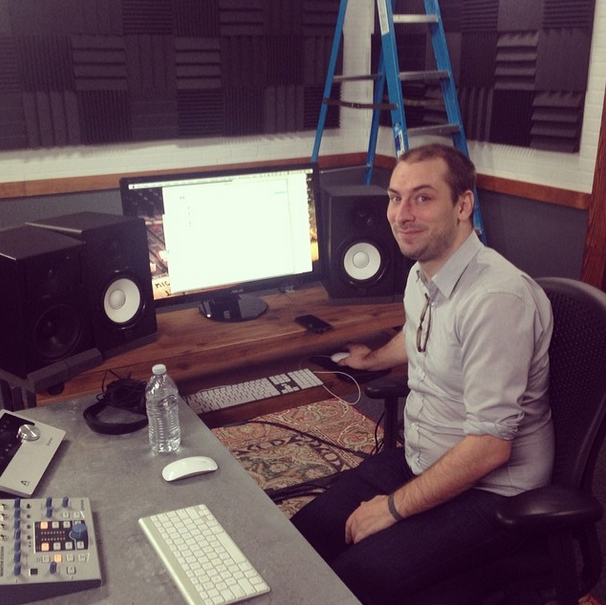 Welcome to the very first episode of the CreativeLive Music & Audio podcast, where we'll spend an hour or so every week talking about making music with some of our favorite producers, bands, CL teachers, and whoever else happens to be around our studios.
Our very first guest is my friend and two-time CL teacher Jesse Cannon. Jesse is a producer who's worked with bands like Man Overboard, The Cure, Transit, and Misfits, the author of the book "Get More Fans," good friend of mine, and generally great great to talk with. He's worked with some of the very best guys in the game (Ross Robinson, Steve Evetts, and Alan Douches @ Westwestside Music), and it shows in the depth the breadth of his knowledge. We chatted about everything from the upcoming second edition of his book to our shared past as 90s hardcore refugees to mastering snobs and Pod Farm presets — check it out!
Welcome to the very first episode of the CreativeLive Music & Audio podcast, where we'll spend an hour or so every week talking about making music with some of our favorite producers, bands, CL teachers, and whoever else happens to be around our studios.
Our very first guest is my friend and two-time CL teacher Jesse Cannon. Jesse is a producer who's worked with bands like Man Overboard, The Cure, Transit, and Misfits, the author of the book "Get More Fans," good friend of mine, and generally great great to talk with. He's worked with some of the very best guys in the game (Ross Robinson, Steve Evetts, and Alan Douches @ Westwestside Music), and it shows in the depth the breadth of his knowledge. We chatted about everything from the upcoming second edition of his book to our shared past as 90s hardcore refugees to mastering snobs and Pod Farm presets — check it out!