[caption id="attachment_19629" align="alignnone" width="620"] Photo by Casey Cosley[/caption]
The transition from a hobbyist to a professional photographer is one that's often fraught with questions, some that even plaque business owners well into their first few years of business. How do I start a photography business? How do I market my business? Am I charging enough? Should I rent a studio space?
Julia Kelleher knows how frustrating it can be to get started. In just three years, she transformed her studio into a six figure business—running into the very same questions every new professional photographer comes across. In preparation for her Studio Systems: A Photography Business Bootcamp, she dished out some tips on the most common questions new and budding photography business owners ask.
Photo by Casey Cosley[/caption]
The transition from a hobbyist to a professional photographer is one that's often fraught with questions, some that even plaque business owners well into their first few years of business. How do I start a photography business? How do I market my business? Am I charging enough? Should I rent a studio space?
Julia Kelleher knows how frustrating it can be to get started. In just three years, she transformed her studio into a six figure business—running into the very same questions every new professional photographer comes across. In preparation for her Studio Systems: A Photography Business Bootcamp, she dished out some tips on the most common questions new and budding photography business owners ask.
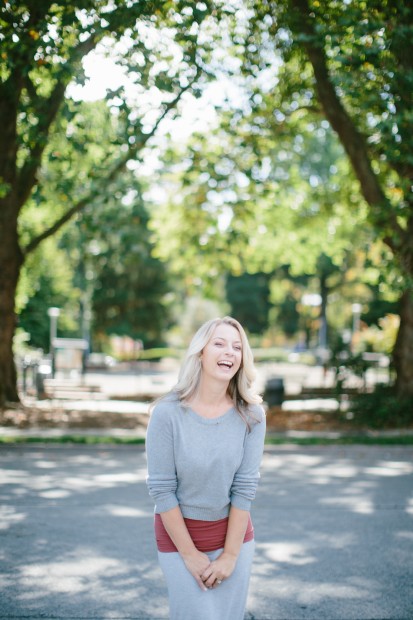
Julia Kelleher brings you the skills you need to find your style with her class Finding, Defining & Using Your Photographic Style.
Photo by Casey Cosley[/caption]
The transition from a hobbyist to a professional photographer is one that's often fraught with questions, some that even plaque business owners well into their first few years of business. How do I start a photography business? How do I market my business? Am I charging enough? Should I rent a studio space?
Julia Kelleher knows how frustrating it can be to get started. In just three years, she transformed her studio into a six figure business—running into the very same questions every new professional photographer comes across. In preparation for her Studio Systems: A Photography Business Bootcamp, she dished out some tips on the most common questions new and budding photography business owners ask.
What's the best way for new photography businesses to market themselves?
At the start, Julia says it's all about building a solid brand. Start prematurely with a weak brand, and you stand to loose clients that could have been repeat customers. “Spend your money on building a solid and attractive brand first,” she says. Putting her own voice into her brand is something that Julia says only started falling into place a few years ago. How did she discover the style that's essential to what her brand is now? She studied other visual elements that she loved—liked in home décor, graphic design and storytelling—and worked to pinpoint why she loved those things. “When I realized I gravitate to things that had a consistent feel, look and theme I knew that was 'it.' Then, when I honed in on my 'purpose' or why I do what I do, the combo of the two really helped make my 'voice' that much stronger.” Once businesses solidify their brand, an excellent way to start marketing is through vendor partnerships, because they are simple and inexpensive but also effective. Partner with another business that reaches out to the same clientele. For newborn photographers like Julia, that means putting up a big display of images at the local hospital. For a wedding photographer, that could mean leaving a sample album and business cards at a wedding venue.How do I set my prices? Am I pricing too low or too high?
Photographers should base their pricing on the COGS, or cost of goods sold—not on what other photographers are charging. The bigger question is determining what you feel you are worth, she says. Factor in your expenses, then consider your time investment, and what you need financially to survive. Most new photographers tend to undervalue their work. “If you are pricing yourself according to proper accounting methods and taking into account all your costs, expenses and what you need to make to survive, then you need not worry about what other 'photographers think'." Julia says. “All that's important is that you run a profitable business based on your business model, and that you account for your expenses. When you truly break it down dollar for dollar, you will find that you have to charge more than you think in order to make any money.”
Is a studio space worth the investment, or should I use a home studio?
Investing in a studio depends on a number of different factors. For Julia's business, switching to a public studio instead of a home option did elevate her brand even more. “Clients looked at me as more 'legit' and respected my prices more,” she says. “They took me a little more seriously, which made running a business easier and gave me more confidence. Clients spend more money easier. It's like the professional space justified what they were paying.” Another unexpected perk? Having a work location instead of working from home makes it easier to turn off work mode and pay full attention to family at the end of the day. That's not to say a studio space is needed for every business, however. Julia says photographers should consider a few things before deciding on a studio space: - How much more money do you need to make to cover the cost of renting a studio? - If the studio location is in a different market than your home studio, does that area suit your brand? - Do you want to commute every day? - What will switching to a studio space mean for your family life?Julia Kelleher brings you the skills you need to find your style with her class Finding, Defining & Using Your Photographic Style.