
 My guess is that there's a chorus of voices making noise in your head. Among them is the voice of doubt. You probably know this voice well. It’s been yelling at you your whole life – and if it were an actual person, you’d long since have told them to get lost. But this voice isn’t going anywhere, and when it comes to writing, it’s probably getting louder the more serious you start to become about your work. I’m going to bet that many of these phrases sound achingly familiar:
- No one wants to hear what I have to say
- I’m not really a writer.
- Nothing interesting ever happened to me so I can’t write a book.
- Why do I think my story is any better than anyone else’s story?
- I must have a big ego to want to write a book.
- I could write a book but no one would read it and that would be humiliating
- Or worse, I could write a book, and lots of people could read it...and then what?
Suffering from flat, fuzzy, or unfocused writing? Take your writing from dull to razor sharp with a little help from Jennie Nash. Watch now.

Acknowledge your doubt, and move on. Whenever you start to hear your version of the "go work at Trader Joe's" voice, stop. Acknowledge that voice. Say, "Oh look, here's doubt, again." Pull a chair up to the table for that doubt ― as if it were a guest in your home. As if you are about to serve it tea. Say, "Come on in, doubt. Make yourself comfortable. Stay awhile. You sit here and I'm just going to go over to my keyboard and do a little writing." This idea of making doubt familiar is hardly unique to writing. The great spiritual leader and Buddhist Thich Nhat Han talks about how fear is a natural constant in our lives. (Fear, like jealousy, being just another form of doubt... ) Instead of fighting it ― of saying, "Go away, Fear. I don't like you. You are not me" ― he urges us to simply say this: "Hello Fear. How are you today?"
Why Doubt is a Good Thing
Not only do the pros acknowledge that doubt exists and that they feel it, they know that the presence of doubt is, in fact, a good sign. It means that you are human, you are alive, you are capable of feeling something and you are on the edge of taking a step that could be profound. One of my favorite books about writing is The War of Art: Break Through Your Blocks and Win Your Inner Creative Battles by Steven Pressfield. I highly recommend it. In The War of Art, Pressfield talks a lot about this good news about doubt. Here are two quotes that ring so true to me: “Are you paralyzed with fear? That’s a good sign. Fear is good. Like self-doubt, fear is an indicator. Fear tells us what we have to do. Remember one rule of thumb: the more scared we are of a work or calling, the more sure we can be that we have to do it.” Moving Through Doubt, Step 1 Okay, so we've seen that doubt is universal and that it's not going to go away. So how do you write in spite of doubt? The solution is exceedingly simple. Focus on the work ― both the work that people have done before you and the work you are doing yourself. Let me explain what I mean by that.1. Focus on other people's work.
In his book, Practicing: A Musician’s Return to Music, Glenn Kurtz talks about how he uses past masters as inspiration to help move past his doubt. He doesn't do this occasionally, he does this every time he sits down to practice the guitar.Suffering from flat, fuzzy, or unfocused writing? Take your writing from dull to razor sharp with a little help from Jennie Nash. Watch now.
Practicing is striving; practicing is a romance. But practicing is also a risk, a test of character, a threat of deeply personal failure. I warm up my hands and awaken my ears and imagination, developing skill equal to my experience. I listen and concentrate in an effort to make myself better. Yet every day I collide with my limits, the constraints of my hands, my instrument, and my imagination. Each morning when I sit down, I’m bewildered by a cacophony of voices, encouraging and dismissive, joyous and harsh, each one a little tyrant, each one insisting on its own direction. And I struggle to harmonize them, to find my way between them, uncertain whether this work is worth it or a waste of my time. Everything I need to make music is here, my hands, my instrument, my imaginations, and these notes. For most of their lives, Segovia, Casals, Bach, and Stravinksy were also just men sitting alone in a room with these same raw materials, looking out the window at people on the street. Like me, they must at times have wondered how to grasp the immensity of music’s promise in a few simple notes, how to hold fast to their devotions against a cutting doubt that would kill it. Think for a minute about all the books you have loved in your life. Now think about why you loved them. Did they bring you solace or comfort, understanding or education, inspiration or entertainment, courage or self-awareness, political motivation or joy? Tapping into these powerful emotions and reminding yourself why books matter can be a fantastic way to help yourself move past doubt. After all, think how tragic it would be if your favorite book had never been written because the author felt doubt? Someone out there might one day say the same thing about you and the book you have yet to write. Here are a couple examples of well-known writers writing about how certain books have influenced them:
 “I’ve just surfaced from spending several days in a state of rapture. I was reading a book.I loved this book. I loved every second of it. I was transported to its world. I was reminded of all sorts of things in my own life. I was in anguish over the fate of its characters. I felt alive and engaged and positively brilliant, bursting with ideas, brimming with memories of other books I’ve loved….I’m truly beside myself with joy." ― Writer-director Nora Ephron on Michael Chabon's The Adventures of Cavalier and Clay
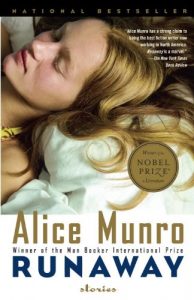 “Reading Munro puts me in that state of quiet reflection in which I think about my own life: about the decisions I've made, the things I've done and haven't done, the kind of person I am, the prospect of death. She is one of the handful of writers, some living, most dead, whom I have in mind when I say that fiction is my religion. For as long as I'm immersed in a Munro story, I am according to an entirely make-believe character the kind of solemn respect and quiet rooting interest that I accord myself in my better moments as a human being.” ― Jonathan Franzen on Alice Munro’s story collection, “Runaway.”
Now take a moment to think about the books you have loved and why. Pick one ― one that pops into your head the strongest. How did this book make you feel? Write it down
Moving Through Doubt, Step 2
“Reading Munro puts me in that state of quiet reflection in which I think about my own life: about the decisions I've made, the things I've done and haven't done, the kind of person I am, the prospect of death. She is one of the handful of writers, some living, most dead, whom I have in mind when I say that fiction is my religion. For as long as I'm immersed in a Munro story, I am according to an entirely make-believe character the kind of solemn respect and quiet rooting interest that I accord myself in my better moments as a human being.” ― Jonathan Franzen on Alice Munro’s story collection, “Runaway.”
Now take a moment to think about the books you have loved and why. Pick one ― one that pops into your head the strongest. How did this book make you feel? Write it down
Moving Through Doubt, Step 2
2. Focus on your own work
The second step in moving through doubt is to focus on your own work. All problems that have to do with being a writer can usually be solved by actually putting your butt in the chair and writing. I'm not kidding. Writing is the solution. "People on the outside think there’s something magical about writing, that you go up in the attic at midnight and cast the bones and come down in the morning with a story, but it isn’t like that. You sit in back of the typewriter and you work, and that’s all there is to it." ― Harlan Ellison "Every hour you spend writing is an hour not spent fretting about your writing." ― Dennis Palumbo, author of Writing from the Inside OutThe Doubt Test
Don't believe anything I'm saying about doubt? Here's a test. Walk away from your work ― start with a week. Don't miss it? Can you leave it alone? Fine, then walk away for a month. If you still don't miss it, try it for a year, and if you can go a year without your work calling to you, then guess what? You may not have to write whatever you thought you had to write, and more power to you! You'll have more time for golf and Downton Abbey. If you can't stay away, it’s time to embrace your doubt and get to work. To read four more reasons you’ll never write a book (and what to do about it before it’s too late), sign up for my newsletter HERE.Suffering from flat, fuzzy, or unfocused writing? Take your writing from dull to razor sharp with a little help from Jennie Nash. Watch now.