
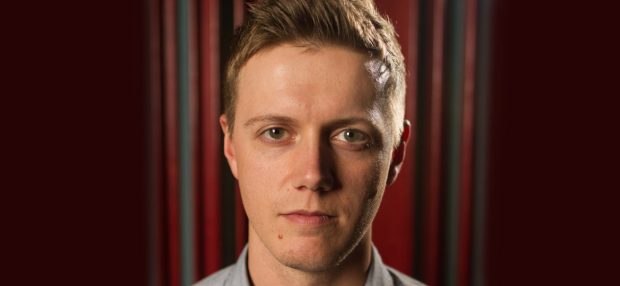
 You might know Will Pugh as the singer, guitarist and primary songwriter for Cartel, a mainstay of the 2000s pop-punk scene along with contemporaries like The Starting Line and Something Corporate. But what you might not know is that Will has been quietly building a name for himself behind the console as a producer in Nashville where he's worked with bands including TEAM*, Hydra Melody and Baby Baby. We caught up with him to get the details on what he's been up to lately, what he learned from his years as an artist, and of course his juicy list of gear porn.
"Producer” can mean a lot of different things. Can you talk about what your approach is? How much of a hand do you like to have in writing and arrangement vs engineering and mixing?
I see each project as a different experience. Some artists need little to nothing arrangement/writing wise. Some need more in that area. For me, it’s all about what is going to get us to the best final product possible. I’ll always put importance on engineering/mixing because that’s my “filter” through which the listener gets to experience the artist. That’s where I hope to make my mark.
Everybody loves some gear porn. Can you give us a rundown of what cool toys you have in your studio? How much do you work in the box?
I’m a gear porn addict. haha. I love it more than working sometimes. My room is built around everything else but drums. I think drums is an instrument that can be fluid in what it needs to be tracked best for the project so I’ll float around to different rooms to get what I need. What’s in my room is a lunchbox with the essentials..a couple Rupert Neve 511 pre’s which are REAL nice, an Inward Connections The Brute, and I’m about to get a pair of Maag Eq 4’s. I’ve got a Hairball 1176 Rev A (Blue Stripe) and an Ashdown bass head for tracking.
For my mix bus I come out of an Apogee DA16x through a Dangerous 2Bus LT into a Regular John Recordings Compressor that is somewhat of a secret weapon. It’s got a really cool multiple switch ratio system where I can combine different ratios rather than having to choose just one. Detented Attack/Release knobs, a Sidechain filter, and a Blend knob are very sweet. I’ve also got a Lundahl transformer that can be defeated if I want and a Distortion circuit thats very cool for printing drums through prior to mix down. As far as mics go I rely on a small selection since it’s mainly vocals/guitars being recorded in my room: a Manley Reference Cardioid, a couple tricked up 57s, 421, SM7B, and a Sterling Audio ST59 thats one of the first they built…you’d be astonished at how many times that mic beats out mics 3-4x the price! With all this stuff I usually just do my processing in the box and send my mix out through all the aforementioned gear and that does a nice job of widening/warming the mix so I don’t spend all my time recalling what I’ve done prior.
You’re living and working in Nashville these days. I know you aren’t a huge country fan, but I’m sure you would agree that the level of talent among the Nashville guys who work on that stuff is off the charts. What have you learned from your time in Nashville?
I’ve learned that I suck at playing any instrument compared to these guys. haha. I’ve got my own thing that I’m better at but as far as an apples to apples comparison they’re just next level. It’s really awesome to use these guys for keyboard/piano parts that I’m incapable of playing. Makes my life really easy.
https://www.youtube.com/watch?v=hxcVORJ4SB8
Since Cartel was plugged into the major label system, you had a chance to work with some really elite producers and studios that a lot of bands never do (especially these days). Were you conscious of that at the time? Looking back on it, what did you from those studio experiences and how do you use it now?
That’s probably my greatest asset as a producer - that I saw these guys working while I was an artist that knew what all the gear did! I picked up so many things that jumpstarted my education in this world. I definitely wouldn’t be capable of doing this as a career now without their tutelage. However, the biggest thing I learned is how to keep the session moving and upbeat when it’s feeling like a struggle. Being a psychic ninja is a skill often overlooked in the production world.
From what I’ve read, you’re a fan of what I would call the “major label rock” sound of the late 90s and 2000s— Rich Costey, Andy Wallace, etc. How do you translate that sound into the reality of today’s recording world, where the budgets and gear used on those records are out of reach for most bands?
I do love how those guys get their records sounding. It’s just open and natural while being powerful and hyped at the same time. Obviously the gear has a lot to do with that and it’ll take a decade of doing this to amass that kind of collection so I keep my sights set at their caliber of recording while keeping in mind that I’m decades behind them. It allows me to figure out how to arrive at something we all love while pushing myself onward and upward.
https://www.youtube.com/watch?v=D1H2xLXygBw
I really liked your mix on the TEAM* album. It felt very big, open and dreamy while still sounding polished and modern, like an updated “Pet Sounds” kind of vibe, especially the drum sound. Can you talk a little about making that record?
I’ll forever be thankful for TEAM allowing me to work on that record. They’re super talented dudes with great songwriting tact so it allowed me to focus more on the sounds than what we were working with which is every producer’s dream. We tracked those drums in one day out at Taylor Tatch’s place in Dallas. He had a really cool setup that was easy to get up and rolling so we just banged out the drums while knowing the vibe we were going for…too easy, right? From there we were just really focused on not doing “too much”. There’s little to no double tracking on that album which allowed the parts to come through individually without crowding the others even when there’s a lot going on. Caleb has a great ear for finding the “gaps” and creating something cool in those spaces.
Once it came to mix I just made sure that the mix didn’t get in the way. I used a lot of different reverbs to put things in their own space and give the whole album some depth and a specific “sound”. I didn’t use any samples on the drums while trying to modernize them as much as I could through Eq/Compression but without losing the intent. That’s where the “Pet Sounds” vibe you’re catching came from….just letting the drums breathe. It’s a vast departure from the pop-punk world where everything is crushed and so in your face. I’m much more of a fan of just creating a soundscape the listener can dive into and surround themselves in because that’s what I like about my favorite records.
You are a really strong songwriter. Sometimes I feel like we get caught up in plugins, presets, and technical stuff and forget about the songs. How do you find that balance of technical and creative?
Thanks! I try not to have a philosophy/plan when it comes to a song. It needs to feel natural and that each part follows the previous one like it was the only way that song could flow. Once you realize that every song on an album isn’t going to be a “single” your life gets 1000% easier. You’ve gotta take people on a journey and allow yourself to take part in that journey first. If it’s all about making “hits” then you’re just running around in the same circle over and over again. That gets really boring I feel. When those “hits” come it feels so much better because you didn’t have to fight so hard to get there. Surrender is a wonderful thing. haha.
Once the songs are “there” and it feels like we’re ready to roll I just try to have a picture in my head of what the album/EP/song is going to do from a sonic standpoint and set off in that direction. Wrapping your head around every plugin, preset, etc. is just impossible. It’s good to know what stuff does but nothing is more important than the song’s content. No one is gonna know if it’s an 1176 or a dbx 160 so stop worrying about all that.
On the one hand, being a producer is more attainable than ever thanks to affordable technology and access to information. On the other, that means the field is more crowded than ever and it’s tough for new producers to cut through the noise. What advice would you have for a producer who’s starting their career?
Don’t try to live off of it at first…it’s gonna take time to build a sound and your knowledge of how to work it. I feel like there’s an invisible wall behind the ease of getting into this world that technology has provided and we all hit it at one point. You need more than just a good ear and a knowledge of gain staging to produce…you gotta know how it all works and ways to manipulate your way to greatness. That only comes through time and experience both of which require patience.
A lot of these new producers will get washed out when times get tough so it’s important to constantly educate yourself and get better….or get an engineer. haha. Most importantly, don’t count yourself as a professional just because you bought a Macbook Pro and Pro Tools. There’s so much more to it than just being able to record something. Nuance is a highly underrated tool. Learn to live in the margins and this world gets a lot easier to navigate.
You might know Will Pugh as the singer, guitarist and primary songwriter for Cartel, a mainstay of the 2000s pop-punk scene along with contemporaries like The Starting Line and Something Corporate. But what you might not know is that Will has been quietly building a name for himself behind the console as a producer in Nashville where he's worked with bands including TEAM*, Hydra Melody and Baby Baby. We caught up with him to get the details on what he's been up to lately, what he learned from his years as an artist, and of course his juicy list of gear porn.
"Producer” can mean a lot of different things. Can you talk about what your approach is? How much of a hand do you like to have in writing and arrangement vs engineering and mixing?
I see each project as a different experience. Some artists need little to nothing arrangement/writing wise. Some need more in that area. For me, it’s all about what is going to get us to the best final product possible. I’ll always put importance on engineering/mixing because that’s my “filter” through which the listener gets to experience the artist. That’s where I hope to make my mark.
Everybody loves some gear porn. Can you give us a rundown of what cool toys you have in your studio? How much do you work in the box?
I’m a gear porn addict. haha. I love it more than working sometimes. My room is built around everything else but drums. I think drums is an instrument that can be fluid in what it needs to be tracked best for the project so I’ll float around to different rooms to get what I need. What’s in my room is a lunchbox with the essentials..a couple Rupert Neve 511 pre’s which are REAL nice, an Inward Connections The Brute, and I’m about to get a pair of Maag Eq 4’s. I’ve got a Hairball 1176 Rev A (Blue Stripe) and an Ashdown bass head for tracking.
For my mix bus I come out of an Apogee DA16x through a Dangerous 2Bus LT into a Regular John Recordings Compressor that is somewhat of a secret weapon. It’s got a really cool multiple switch ratio system where I can combine different ratios rather than having to choose just one. Detented Attack/Release knobs, a Sidechain filter, and a Blend knob are very sweet. I’ve also got a Lundahl transformer that can be defeated if I want and a Distortion circuit thats very cool for printing drums through prior to mix down. As far as mics go I rely on a small selection since it’s mainly vocals/guitars being recorded in my room: a Manley Reference Cardioid, a couple tricked up 57s, 421, SM7B, and a Sterling Audio ST59 thats one of the first they built…you’d be astonished at how many times that mic beats out mics 3-4x the price! With all this stuff I usually just do my processing in the box and send my mix out through all the aforementioned gear and that does a nice job of widening/warming the mix so I don’t spend all my time recalling what I’ve done prior.
You’re living and working in Nashville these days. I know you aren’t a huge country fan, but I’m sure you would agree that the level of talent among the Nashville guys who work on that stuff is off the charts. What have you learned from your time in Nashville?
I’ve learned that I suck at playing any instrument compared to these guys. haha. I’ve got my own thing that I’m better at but as far as an apples to apples comparison they’re just next level. It’s really awesome to use these guys for keyboard/piano parts that I’m incapable of playing. Makes my life really easy.
https://www.youtube.com/watch?v=hxcVORJ4SB8
Since Cartel was plugged into the major label system, you had a chance to work with some really elite producers and studios that a lot of bands never do (especially these days). Were you conscious of that at the time? Looking back on it, what did you from those studio experiences and how do you use it now?
That’s probably my greatest asset as a producer - that I saw these guys working while I was an artist that knew what all the gear did! I picked up so many things that jumpstarted my education in this world. I definitely wouldn’t be capable of doing this as a career now without their tutelage. However, the biggest thing I learned is how to keep the session moving and upbeat when it’s feeling like a struggle. Being a psychic ninja is a skill often overlooked in the production world.
From what I’ve read, you’re a fan of what I would call the “major label rock” sound of the late 90s and 2000s— Rich Costey, Andy Wallace, etc. How do you translate that sound into the reality of today’s recording world, where the budgets and gear used on those records are out of reach for most bands?
I do love how those guys get their records sounding. It’s just open and natural while being powerful and hyped at the same time. Obviously the gear has a lot to do with that and it’ll take a decade of doing this to amass that kind of collection so I keep my sights set at their caliber of recording while keeping in mind that I’m decades behind them. It allows me to figure out how to arrive at something we all love while pushing myself onward and upward.
https://www.youtube.com/watch?v=D1H2xLXygBw
I really liked your mix on the TEAM* album. It felt very big, open and dreamy while still sounding polished and modern, like an updated “Pet Sounds” kind of vibe, especially the drum sound. Can you talk a little about making that record?
I’ll forever be thankful for TEAM allowing me to work on that record. They’re super talented dudes with great songwriting tact so it allowed me to focus more on the sounds than what we were working with which is every producer’s dream. We tracked those drums in one day out at Taylor Tatch’s place in Dallas. He had a really cool setup that was easy to get up and rolling so we just banged out the drums while knowing the vibe we were going for…too easy, right? From there we were just really focused on not doing “too much”. There’s little to no double tracking on that album which allowed the parts to come through individually without crowding the others even when there’s a lot going on. Caleb has a great ear for finding the “gaps” and creating something cool in those spaces.
Once it came to mix I just made sure that the mix didn’t get in the way. I used a lot of different reverbs to put things in their own space and give the whole album some depth and a specific “sound”. I didn’t use any samples on the drums while trying to modernize them as much as I could through Eq/Compression but without losing the intent. That’s where the “Pet Sounds” vibe you’re catching came from….just letting the drums breathe. It’s a vast departure from the pop-punk world where everything is crushed and so in your face. I’m much more of a fan of just creating a soundscape the listener can dive into and surround themselves in because that’s what I like about my favorite records.
You are a really strong songwriter. Sometimes I feel like we get caught up in plugins, presets, and technical stuff and forget about the songs. How do you find that balance of technical and creative?
Thanks! I try not to have a philosophy/plan when it comes to a song. It needs to feel natural and that each part follows the previous one like it was the only way that song could flow. Once you realize that every song on an album isn’t going to be a “single” your life gets 1000% easier. You’ve gotta take people on a journey and allow yourself to take part in that journey first. If it’s all about making “hits” then you’re just running around in the same circle over and over again. That gets really boring I feel. When those “hits” come it feels so much better because you didn’t have to fight so hard to get there. Surrender is a wonderful thing. haha.
Once the songs are “there” and it feels like we’re ready to roll I just try to have a picture in my head of what the album/EP/song is going to do from a sonic standpoint and set off in that direction. Wrapping your head around every plugin, preset, etc. is just impossible. It’s good to know what stuff does but nothing is more important than the song’s content. No one is gonna know if it’s an 1176 or a dbx 160 so stop worrying about all that.
On the one hand, being a producer is more attainable than ever thanks to affordable technology and access to information. On the other, that means the field is more crowded than ever and it’s tough for new producers to cut through the noise. What advice would you have for a producer who’s starting their career?
Don’t try to live off of it at first…it’s gonna take time to build a sound and your knowledge of how to work it. I feel like there’s an invisible wall behind the ease of getting into this world that technology has provided and we all hit it at one point. You need more than just a good ear and a knowledge of gain staging to produce…you gotta know how it all works and ways to manipulate your way to greatness. That only comes through time and experience both of which require patience.
A lot of these new producers will get washed out when times get tough so it’s important to constantly educate yourself and get better….or get an engineer. haha. Most importantly, don’t count yourself as a professional just because you bought a Macbook Pro and Pro Tools. There’s so much more to it than just being able to record something. Nuance is a highly underrated tool. Learn to live in the margins and this world gets a lot easier to navigate.
You might know Will Pugh as the singer, guitarist and primary songwriter for Cartel, a mainstay of the 2000s pop-punk scene along with contemporaries like The Starting Line and Something Corporate. But what you might not know is that Will has been quietly building a name for himself behind the console as a producer in Nashville where he's worked with bands including TEAM*, Hydra Melody and Baby Baby. We caught up with him to get the details on what he's been up to lately, what he learned from his years as an artist, and of course his juicy list of gear porn.
"Producer” can mean a lot of different things. Can you talk about what your approach is? How much of a hand do you like to have in writing and arrangement vs engineering and mixing?
I see each project as a different experience. Some artists need little to nothing arrangement/writing wise. Some need more in that area. For me, it’s all about what is going to get us to the best final product possible. I’ll always put importance on engineering/mixing because that’s my “filter” through which the listener gets to experience the artist. That’s where I hope to make my mark.
Everybody loves some gear porn. Can you give us a rundown of what cool toys you have in your studio? How much do you work in the box?
I’m a gear porn addict. haha. I love it more than working sometimes. My room is built around everything else but drums. I think drums is an instrument that can be fluid in what it needs to be tracked best for the project so I’ll float around to different rooms to get what I need. What’s in my room is a lunchbox with the essentials..a couple Rupert Neve 511 pre’s which are REAL nice, an Inward Connections The Brute, and I’m about to get a pair of Maag Eq 4’s. I’ve got a Hairball 1176 Rev A (Blue Stripe) and an Ashdown bass head for tracking.
For my mix bus I come out of an Apogee DA16x through a Dangerous 2Bus LT into a Regular John Recordings Compressor that is somewhat of a secret weapon. It’s got a really cool multiple switch ratio system where I can combine different ratios rather than having to choose just one. Detented Attack/Release knobs, a Sidechain filter, and a Blend knob are very sweet. I’ve also got a Lundahl transformer that can be defeated if I want and a Distortion circuit thats very cool for printing drums through prior to mix down. As far as mics go I rely on a small selection since it’s mainly vocals/guitars being recorded in my room: a Manley Reference Cardioid, a couple tricked up 57s, 421, SM7B, and a Sterling Audio ST59 thats one of the first they built…you’d be astonished at how many times that mic beats out mics 3-4x the price! With all this stuff I usually just do my processing in the box and send my mix out through all the aforementioned gear and that does a nice job of widening/warming the mix so I don’t spend all my time recalling what I’ve done prior.
You’re living and working in Nashville these days. I know you aren’t a huge country fan, but I’m sure you would agree that the level of talent among the Nashville guys who work on that stuff is off the charts. What have you learned from your time in Nashville?
I’ve learned that I suck at playing any instrument compared to these guys. haha. I’ve got my own thing that I’m better at but as far as an apples to apples comparison they’re just next level. It’s really awesome to use these guys for keyboard/piano parts that I’m incapable of playing. Makes my life really easy.
https://www.youtube.com/watch?v=hxcVORJ4SB8
Since Cartel was plugged into the major label system, you had a chance to work with some really elite producers and studios that a lot of bands never do (especially these days). Were you conscious of that at the time? Looking back on it, what did you from those studio experiences and how do you use it now?
That’s probably my greatest asset as a producer - that I saw these guys working while I was an artist that knew what all the gear did! I picked up so many things that jumpstarted my education in this world. I definitely wouldn’t be capable of doing this as a career now without their tutelage. However, the biggest thing I learned is how to keep the session moving and upbeat when it’s feeling like a struggle. Being a psychic ninja is a skill often overlooked in the production world.
From what I’ve read, you’re a fan of what I would call the “major label rock” sound of the late 90s and 2000s— Rich Costey, Andy Wallace, etc. How do you translate that sound into the reality of today’s recording world, where the budgets and gear used on those records are out of reach for most bands?
I do love how those guys get their records sounding. It’s just open and natural while being powerful and hyped at the same time. Obviously the gear has a lot to do with that and it’ll take a decade of doing this to amass that kind of collection so I keep my sights set at their caliber of recording while keeping in mind that I’m decades behind them. It allows me to figure out how to arrive at something we all love while pushing myself onward and upward.
https://www.youtube.com/watch?v=D1H2xLXygBw
I really liked your mix on the TEAM* album. It felt very big, open and dreamy while still sounding polished and modern, like an updated “Pet Sounds” kind of vibe, especially the drum sound. Can you talk a little about making that record?
I’ll forever be thankful for TEAM allowing me to work on that record. They’re super talented dudes with great songwriting tact so it allowed me to focus more on the sounds than what we were working with which is every producer’s dream. We tracked those drums in one day out at Taylor Tatch’s place in Dallas. He had a really cool setup that was easy to get up and rolling so we just banged out the drums while knowing the vibe we were going for…too easy, right? From there we were just really focused on not doing “too much”. There’s little to no double tracking on that album which allowed the parts to come through individually without crowding the others even when there’s a lot going on. Caleb has a great ear for finding the “gaps” and creating something cool in those spaces.
Once it came to mix I just made sure that the mix didn’t get in the way. I used a lot of different reverbs to put things in their own space and give the whole album some depth and a specific “sound”. I didn’t use any samples on the drums while trying to modernize them as much as I could through Eq/Compression but without losing the intent. That’s where the “Pet Sounds” vibe you’re catching came from….just letting the drums breathe. It’s a vast departure from the pop-punk world where everything is crushed and so in your face. I’m much more of a fan of just creating a soundscape the listener can dive into and surround themselves in because that’s what I like about my favorite records.
You are a really strong songwriter. Sometimes I feel like we get caught up in plugins, presets, and technical stuff and forget about the songs. How do you find that balance of technical and creative?
Thanks! I try not to have a philosophy/plan when it comes to a song. It needs to feel natural and that each part follows the previous one like it was the only way that song could flow. Once you realize that every song on an album isn’t going to be a “single” your life gets 1000% easier. You’ve gotta take people on a journey and allow yourself to take part in that journey first. If it’s all about making “hits” then you’re just running around in the same circle over and over again. That gets really boring I feel. When those “hits” come it feels so much better because you didn’t have to fight so hard to get there. Surrender is a wonderful thing. haha.
Once the songs are “there” and it feels like we’re ready to roll I just try to have a picture in my head of what the album/EP/song is going to do from a sonic standpoint and set off in that direction. Wrapping your head around every plugin, preset, etc. is just impossible. It’s good to know what stuff does but nothing is more important than the song’s content. No one is gonna know if it’s an 1176 or a dbx 160 so stop worrying about all that.
On the one hand, being a producer is more attainable than ever thanks to affordable technology and access to information. On the other, that means the field is more crowded than ever and it’s tough for new producers to cut through the noise. What advice would you have for a producer who’s starting their career?
Don’t try to live off of it at first…it’s gonna take time to build a sound and your knowledge of how to work it. I feel like there’s an invisible wall behind the ease of getting into this world that technology has provided and we all hit it at one point. You need more than just a good ear and a knowledge of gain staging to produce…you gotta know how it all works and ways to manipulate your way to greatness. That only comes through time and experience both of which require patience.
A lot of these new producers will get washed out when times get tough so it’s important to constantly educate yourself and get better….or get an engineer. haha. Most importantly, don’t count yourself as a professional just because you bought a Macbook Pro and Pro Tools. There’s so much more to it than just being able to record something. Nuance is a highly underrated tool. Learn to live in the margins and this world gets a lot easier to navigate.
You might know Will Pugh as the singer, guitarist and primary songwriter for Cartel, a mainstay of the 2000s pop-punk scene along with contemporaries like The Starting Line and Something Corporate. But what you might not know is that Will has been quietly building a name for himself behind the console as a producer in Nashville where he's worked with bands including TEAM*, Hydra Melody and Baby Baby. We caught up with him to get the details on what he's been up to lately, what he learned from his years as an artist, and of course his juicy list of gear porn.
"Producer” can mean a lot of different things. Can you talk about what your approach is? How much of a hand do you like to have in writing and arrangement vs engineering and mixing?
I see each project as a different experience. Some artists need little to nothing arrangement/writing wise. Some need more in that area. For me, it’s all about what is going to get us to the best final product possible. I’ll always put importance on engineering/mixing because that’s my “filter” through which the listener gets to experience the artist. That’s where I hope to make my mark.
Everybody loves some gear porn. Can you give us a rundown of what cool toys you have in your studio? How much do you work in the box?
I’m a gear porn addict. haha. I love it more than working sometimes. My room is built around everything else but drums. I think drums is an instrument that can be fluid in what it needs to be tracked best for the project so I’ll float around to different rooms to get what I need. What’s in my room is a lunchbox with the essentials..a couple Rupert Neve 511 pre’s which are REAL nice, an Inward Connections The Brute, and I’m about to get a pair of Maag Eq 4’s. I’ve got a Hairball 1176 Rev A (Blue Stripe) and an Ashdown bass head for tracking.
For my mix bus I come out of an Apogee DA16x through a Dangerous 2Bus LT into a Regular John Recordings Compressor that is somewhat of a secret weapon. It’s got a really cool multiple switch ratio system where I can combine different ratios rather than having to choose just one. Detented Attack/Release knobs, a Sidechain filter, and a Blend knob are very sweet. I’ve also got a Lundahl transformer that can be defeated if I want and a Distortion circuit thats very cool for printing drums through prior to mix down. As far as mics go I rely on a small selection since it’s mainly vocals/guitars being recorded in my room: a Manley Reference Cardioid, a couple tricked up 57s, 421, SM7B, and a Sterling Audio ST59 thats one of the first they built…you’d be astonished at how many times that mic beats out mics 3-4x the price! With all this stuff I usually just do my processing in the box and send my mix out through all the aforementioned gear and that does a nice job of widening/warming the mix so I don’t spend all my time recalling what I’ve done prior.
You’re living and working in Nashville these days. I know you aren’t a huge country fan, but I’m sure you would agree that the level of talent among the Nashville guys who work on that stuff is off the charts. What have you learned from your time in Nashville?
I’ve learned that I suck at playing any instrument compared to these guys. haha. I’ve got my own thing that I’m better at but as far as an apples to apples comparison they’re just next level. It’s really awesome to use these guys for keyboard/piano parts that I’m incapable of playing. Makes my life really easy.
https://www.youtube.com/watch?v=hxcVORJ4SB8
Since Cartel was plugged into the major label system, you had a chance to work with some really elite producers and studios that a lot of bands never do (especially these days). Were you conscious of that at the time? Looking back on it, what did you from those studio experiences and how do you use it now?
That’s probably my greatest asset as a producer - that I saw these guys working while I was an artist that knew what all the gear did! I picked up so many things that jumpstarted my education in this world. I definitely wouldn’t be capable of doing this as a career now without their tutelage. However, the biggest thing I learned is how to keep the session moving and upbeat when it’s feeling like a struggle. Being a psychic ninja is a skill often overlooked in the production world.
From what I’ve read, you’re a fan of what I would call the “major label rock” sound of the late 90s and 2000s— Rich Costey, Andy Wallace, etc. How do you translate that sound into the reality of today’s recording world, where the budgets and gear used on those records are out of reach for most bands?
I do love how those guys get their records sounding. It’s just open and natural while being powerful and hyped at the same time. Obviously the gear has a lot to do with that and it’ll take a decade of doing this to amass that kind of collection so I keep my sights set at their caliber of recording while keeping in mind that I’m decades behind them. It allows me to figure out how to arrive at something we all love while pushing myself onward and upward.
https://www.youtube.com/watch?v=D1H2xLXygBw
I really liked your mix on the TEAM* album. It felt very big, open and dreamy while still sounding polished and modern, like an updated “Pet Sounds” kind of vibe, especially the drum sound. Can you talk a little about making that record?
I’ll forever be thankful for TEAM allowing me to work on that record. They’re super talented dudes with great songwriting tact so it allowed me to focus more on the sounds than what we were working with which is every producer’s dream. We tracked those drums in one day out at Taylor Tatch’s place in Dallas. He had a really cool setup that was easy to get up and rolling so we just banged out the drums while knowing the vibe we were going for…too easy, right? From there we were just really focused on not doing “too much”. There’s little to no double tracking on that album which allowed the parts to come through individually without crowding the others even when there’s a lot going on. Caleb has a great ear for finding the “gaps” and creating something cool in those spaces.
Once it came to mix I just made sure that the mix didn’t get in the way. I used a lot of different reverbs to put things in their own space and give the whole album some depth and a specific “sound”. I didn’t use any samples on the drums while trying to modernize them as much as I could through Eq/Compression but without losing the intent. That’s where the “Pet Sounds” vibe you’re catching came from….just letting the drums breathe. It’s a vast departure from the pop-punk world where everything is crushed and so in your face. I’m much more of a fan of just creating a soundscape the listener can dive into and surround themselves in because that’s what I like about my favorite records.
You are a really strong songwriter. Sometimes I feel like we get caught up in plugins, presets, and technical stuff and forget about the songs. How do you find that balance of technical and creative?
Thanks! I try not to have a philosophy/plan when it comes to a song. It needs to feel natural and that each part follows the previous one like it was the only way that song could flow. Once you realize that every song on an album isn’t going to be a “single” your life gets 1000% easier. You’ve gotta take people on a journey and allow yourself to take part in that journey first. If it’s all about making “hits” then you’re just running around in the same circle over and over again. That gets really boring I feel. When those “hits” come it feels so much better because you didn’t have to fight so hard to get there. Surrender is a wonderful thing. haha.
Once the songs are “there” and it feels like we’re ready to roll I just try to have a picture in my head of what the album/EP/song is going to do from a sonic standpoint and set off in that direction. Wrapping your head around every plugin, preset, etc. is just impossible. It’s good to know what stuff does but nothing is more important than the song’s content. No one is gonna know if it’s an 1176 or a dbx 160 so stop worrying about all that.
On the one hand, being a producer is more attainable than ever thanks to affordable technology and access to information. On the other, that means the field is more crowded than ever and it’s tough for new producers to cut through the noise. What advice would you have for a producer who’s starting their career?
Don’t try to live off of it at first…it’s gonna take time to build a sound and your knowledge of how to work it. I feel like there’s an invisible wall behind the ease of getting into this world that technology has provided and we all hit it at one point. You need more than just a good ear and a knowledge of gain staging to produce…you gotta know how it all works and ways to manipulate your way to greatness. That only comes through time and experience both of which require patience.
A lot of these new producers will get washed out when times get tough so it’s important to constantly educate yourself and get better….or get an engineer. haha. Most importantly, don’t count yourself as a professional just because you bought a Macbook Pro and Pro Tools. There’s so much more to it than just being able to record something. Nuance is a highly underrated tool. Learn to live in the margins and this world gets a lot easier to navigate.